Browser-controlled astrophotography · open-source

Your rig.
Any device.

A complete imaging session, covering equipment, guiding, plate-solving and the sequencer, running on a Raspberry Pi, a Windows mini PC, or anywhere else, controlled from the browser of your phone, laptop, or warm-room tablet.

N.I.N.A. Polaris is a community-driven fork of N.I.N.A. It is not affiliated with or supported by the official N.I.N.A. team. For anything Polaris, open an issue on this repository; please do not contact the N.I.N.A. developers about it.

IC 434 / Horsehead & Flame · M. Pugh, used by permission

Everything your session needs

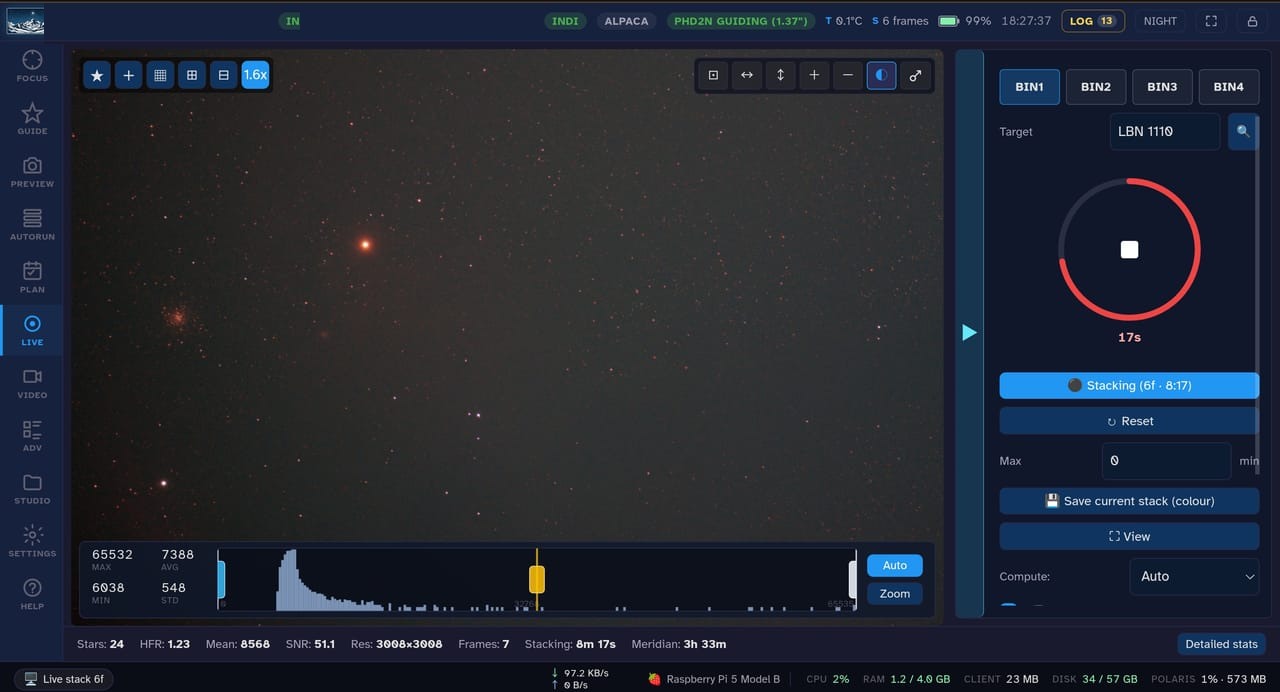
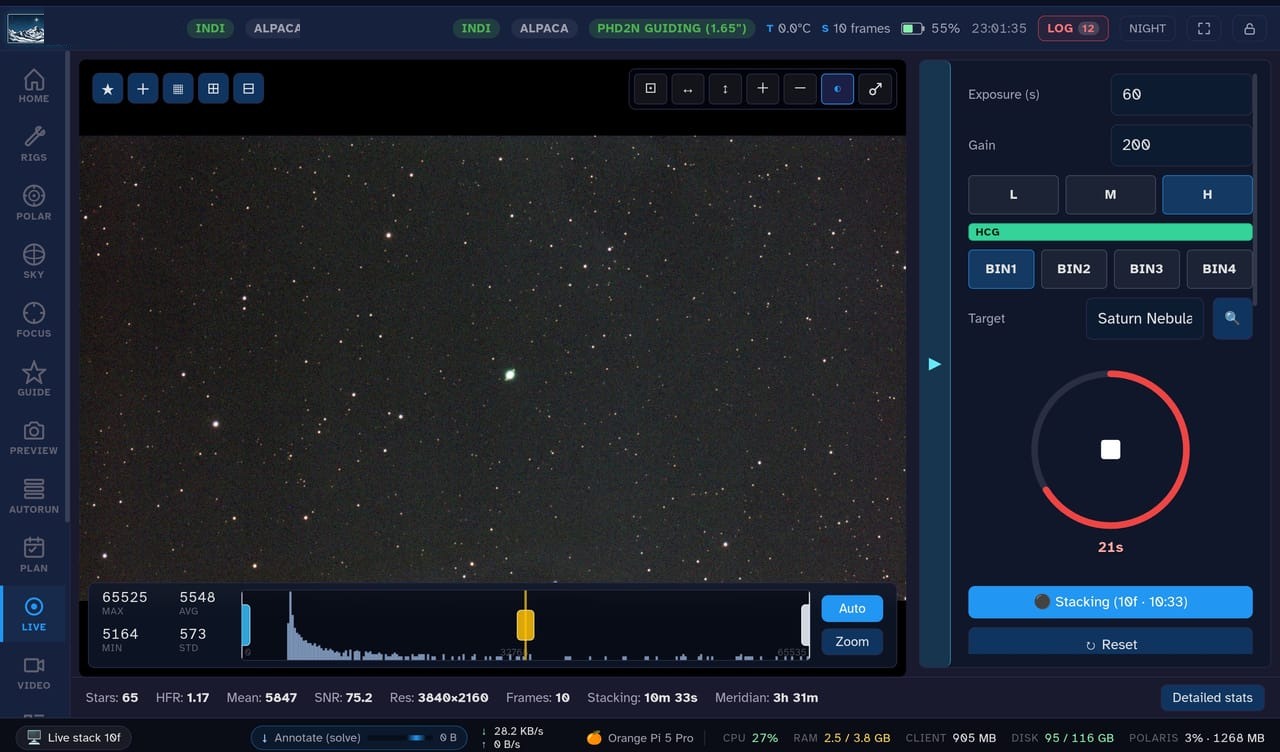
From connecting the hardware to a finished image: capture, guiding, framing, live stacking, sequencing, and AI post-processing, all driven from the browser.

🔭

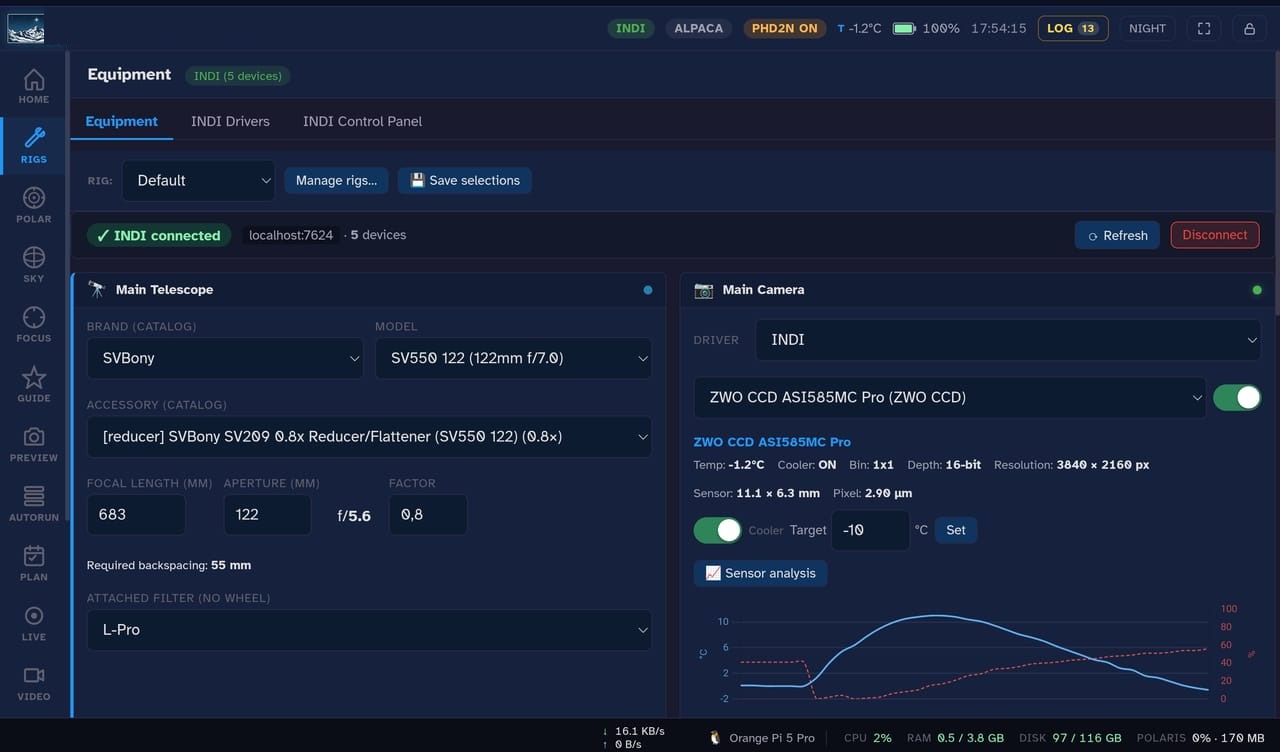
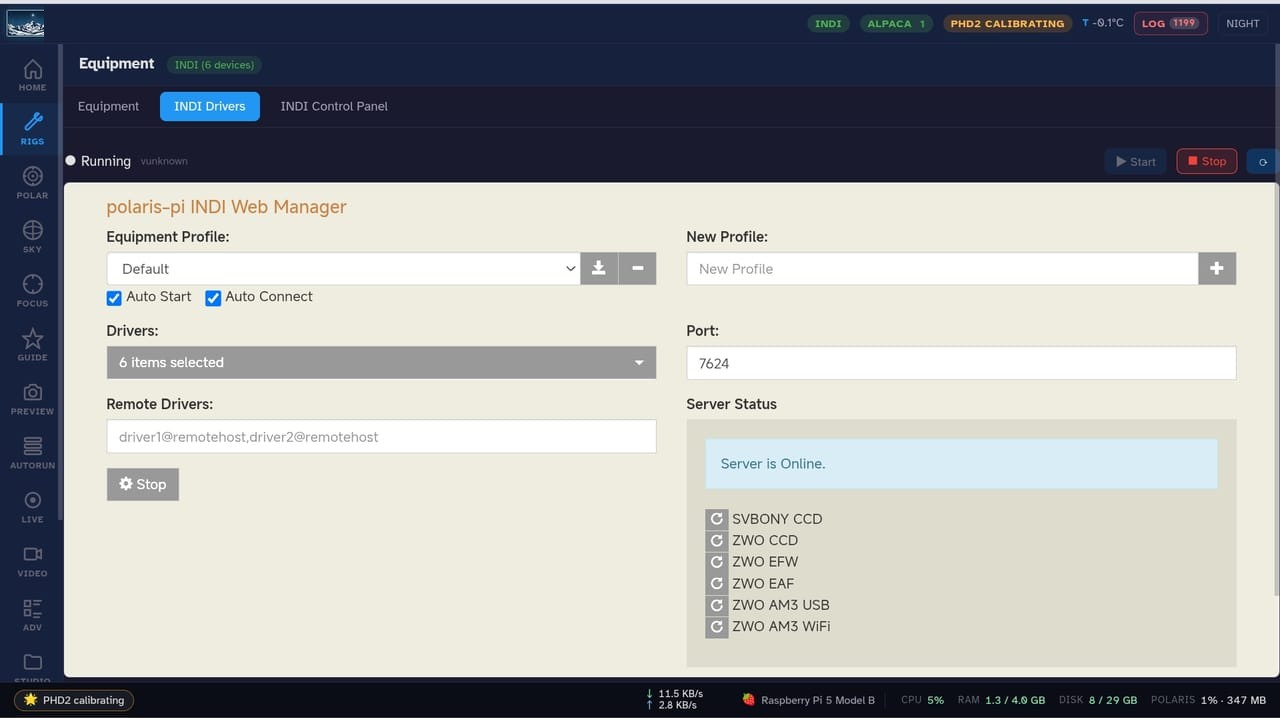
Connect any rig: INDI, ASCOM, Alpaca + native drivers

Talk to your gear over INDI (400+ Linux drivers), over ASCOM and Alpaca across the LAN, or through native camera SDKs for ZWO, Player One, and Canon, Nikon and Sony DSLR/mirrorless. Auto-discovery finds devices on the network.

📡

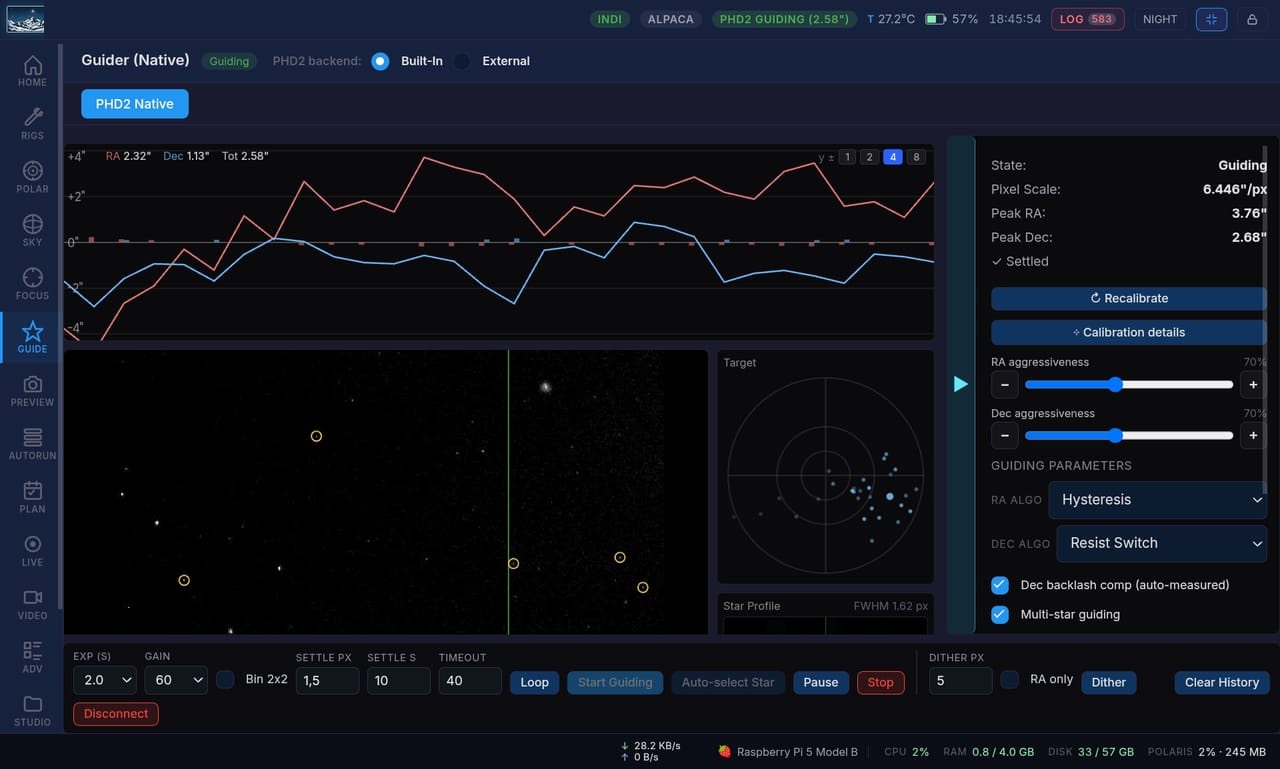
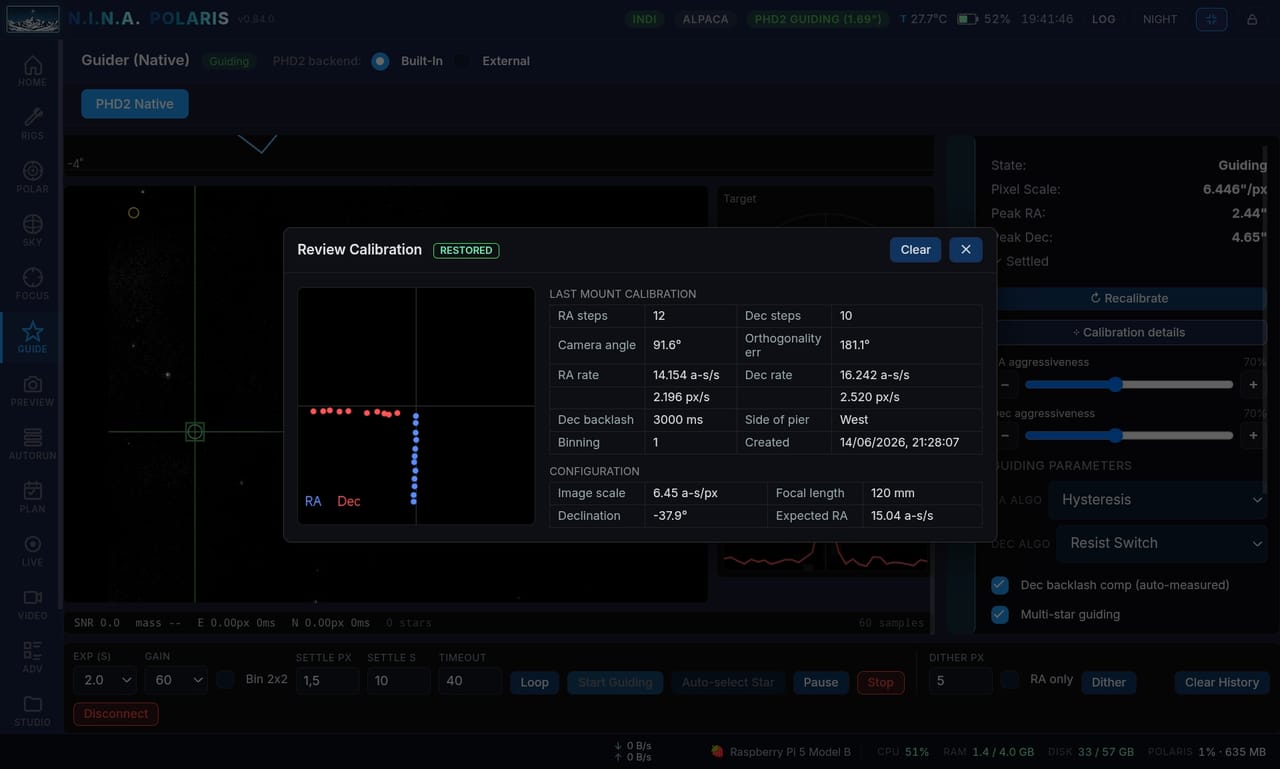
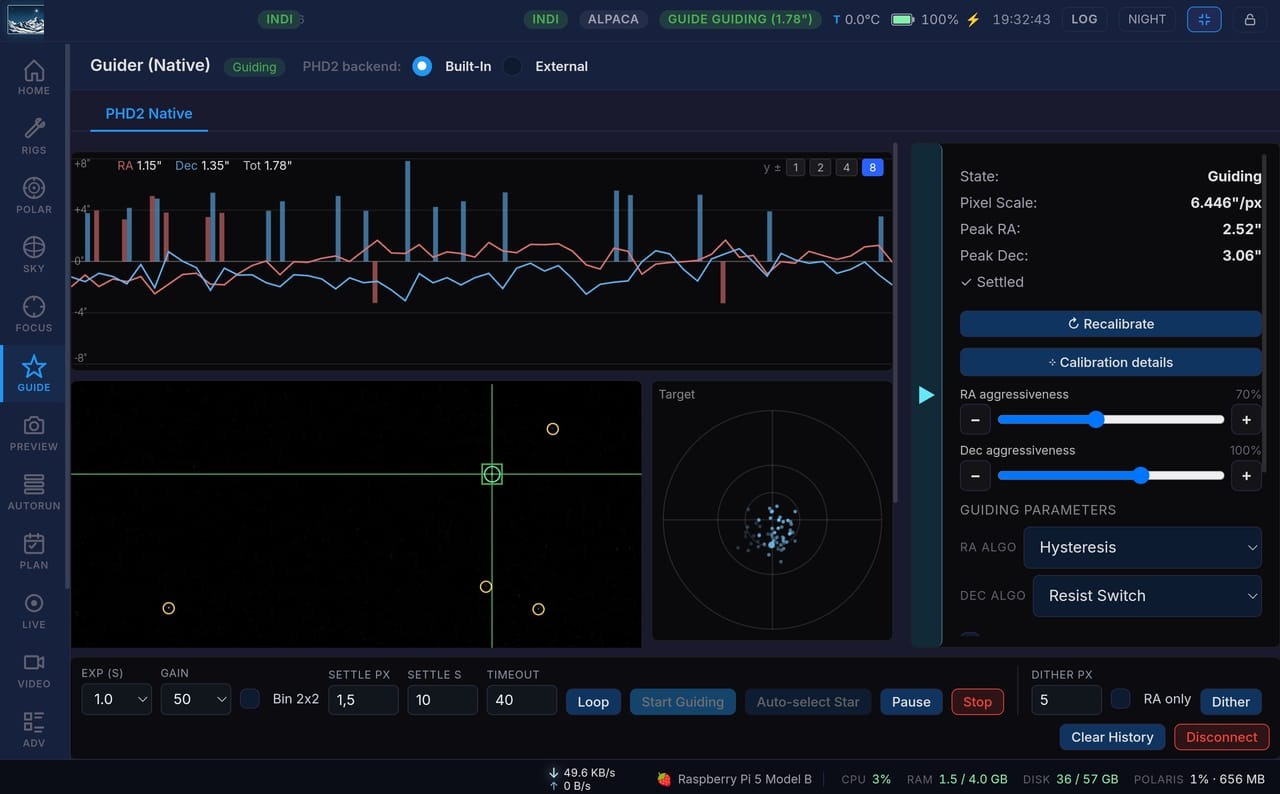
Native PHD2 guiding, with fallback to the real app

A native PHD2 implementation drives guiding directly, with a live RA/Dec chart, dither, settle, and profiles. When you want the original PHD2 interface, fall back to the real application embedded right in the browser over xpra or VNC.

🌌

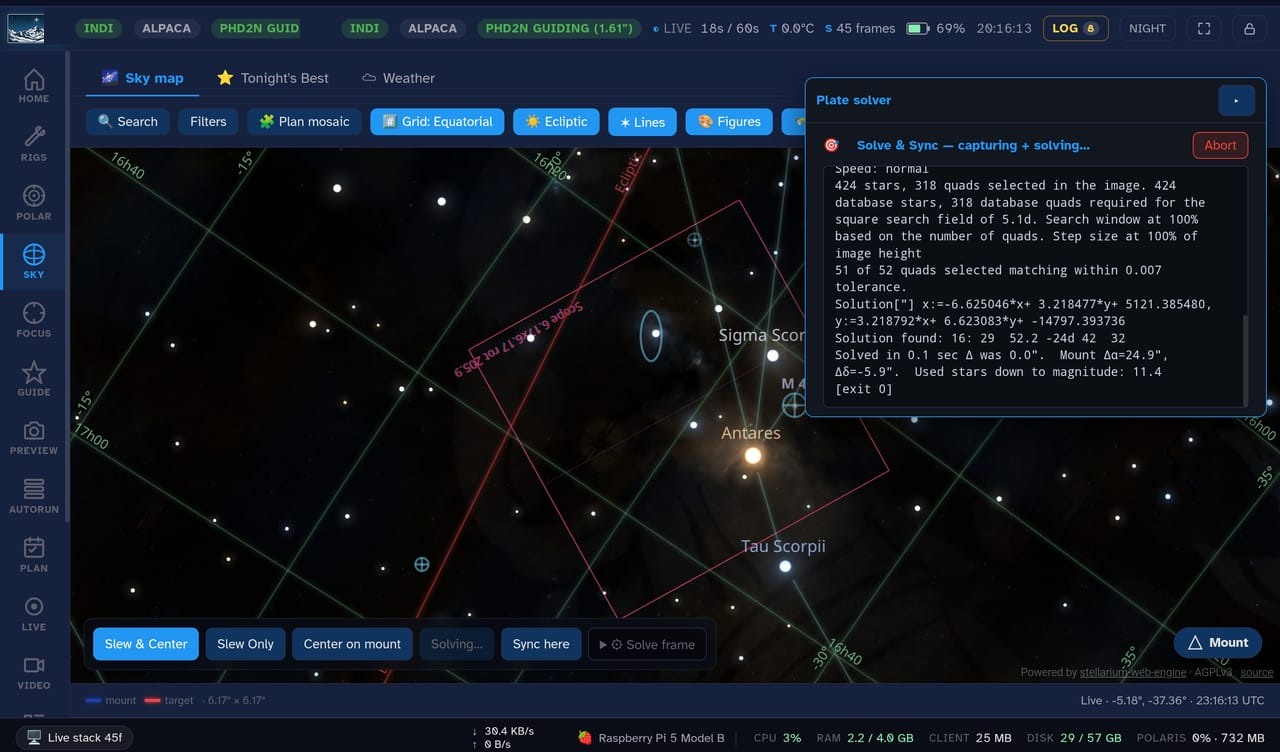
Sky explorer with slew & center

A full sky explorer powered by the Stellarium Web Engine, with total mount integration. Pick any target, slew to it, then plate-solve and center automatically, all from the browser.

📸

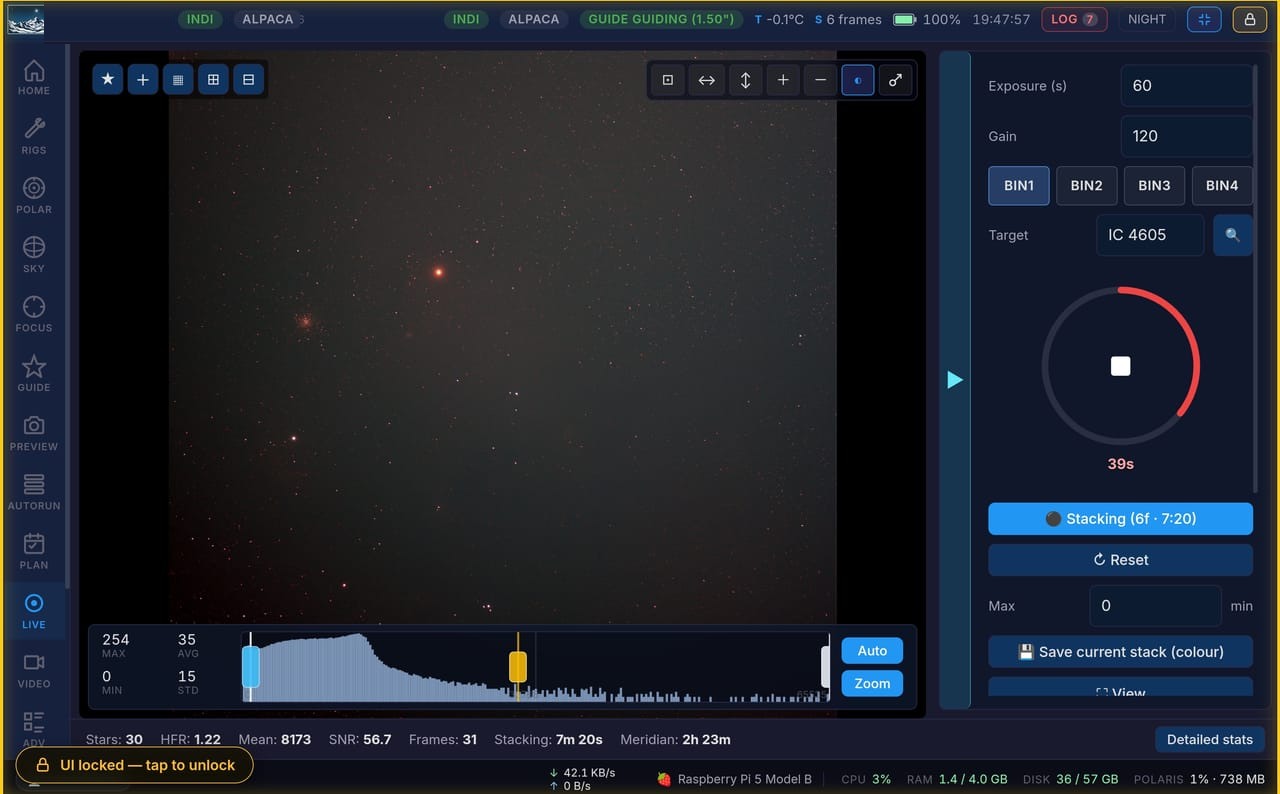
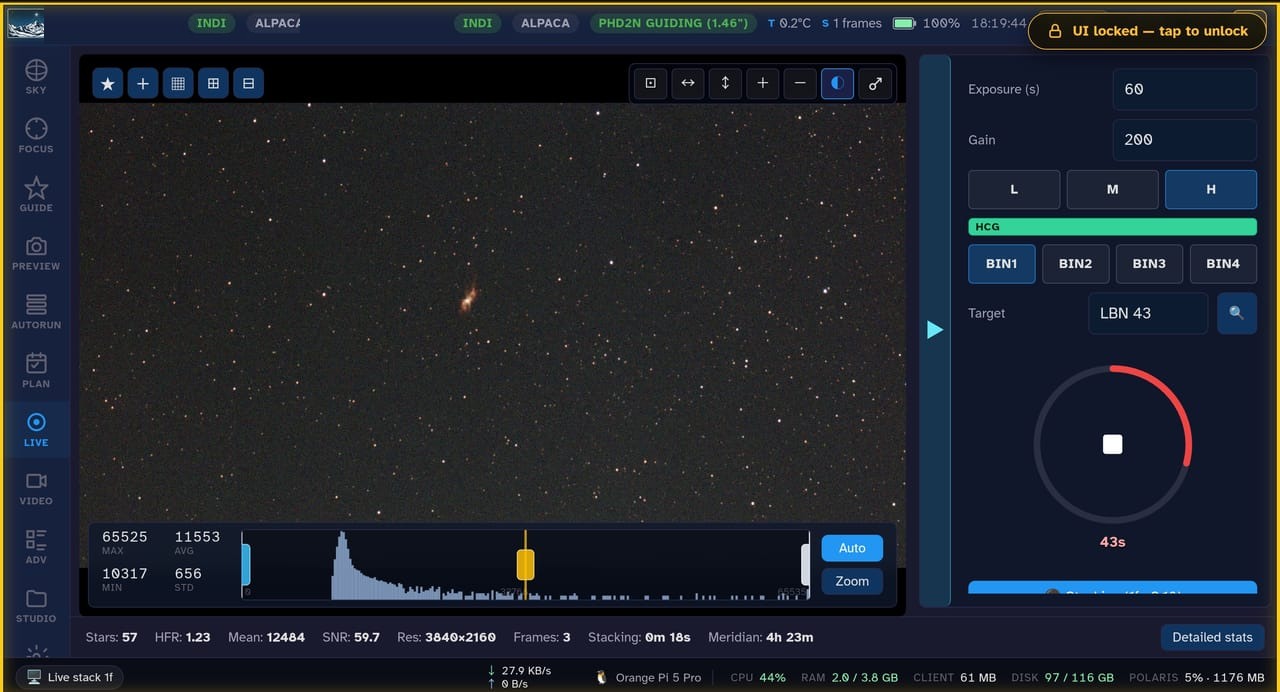
Complete live stacking panel

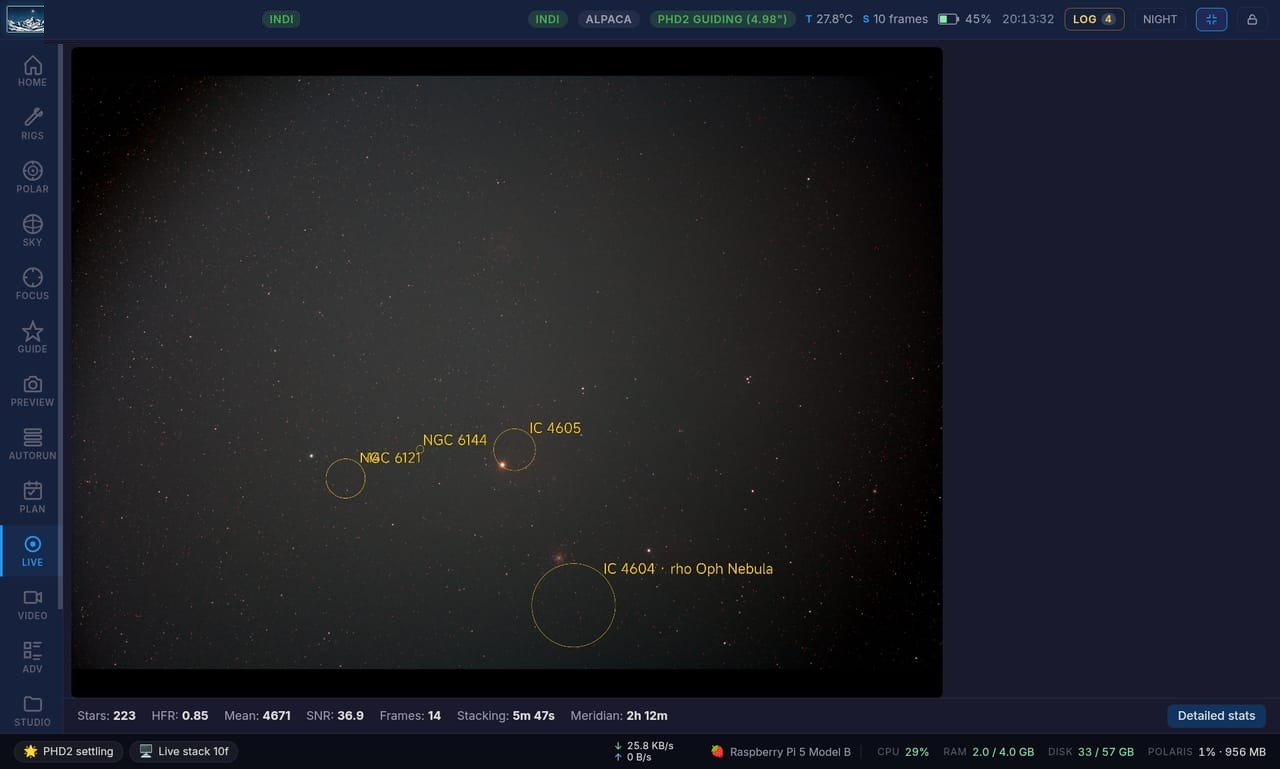
EAA-style live stacking with registration, integration, and real-time stretch over a bandwidth-adaptive WebSocket stream, so the image builds up live as each frame lands.

🎥

Video recording + processing

Record high-frame-rate video for planetary, lunar, and solar work, then process it on the spot for lucky-imaging results.

🌲

Advanced sequencer

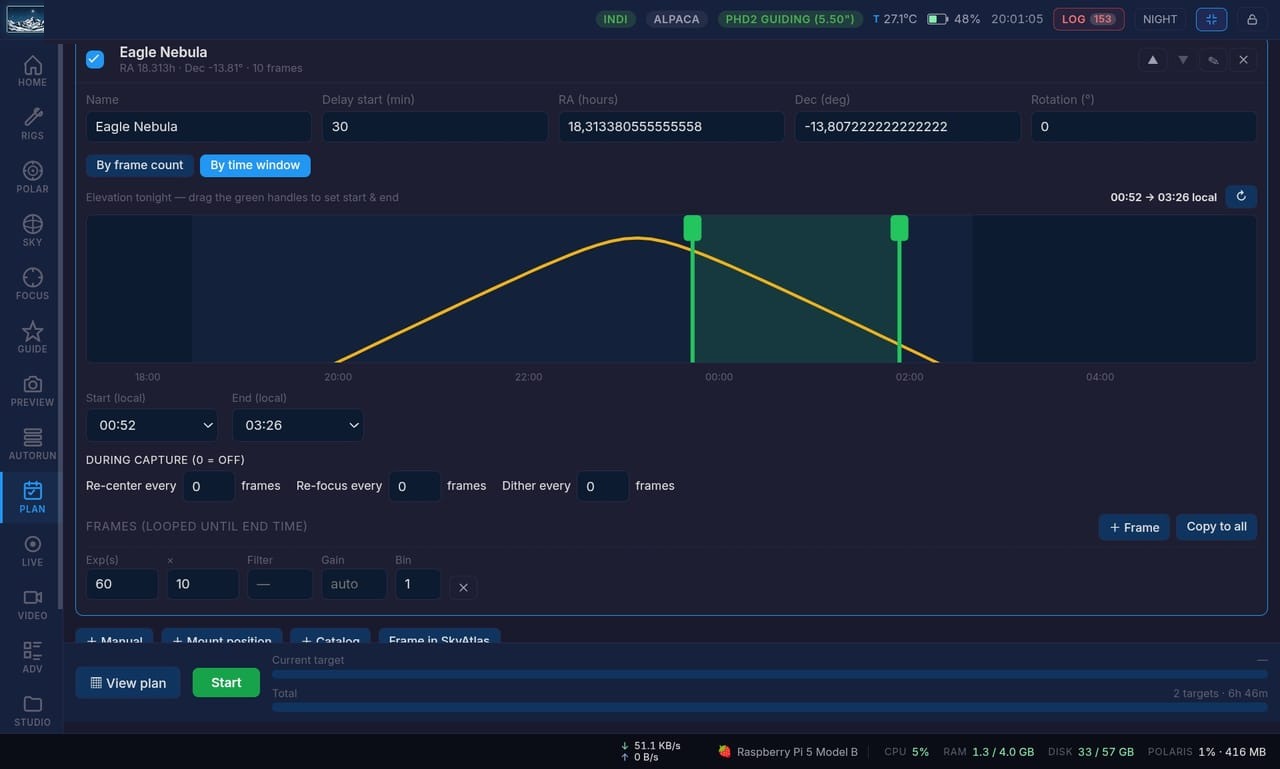
A tree-based sequencer with containers, loop conditions, and event triggers: auto-focus on temperature or HFR drift, meridian flip, dither, safety abort. Drag and drop the whole plan in the browser.

🔬

Auto focus

Automated focusing with V-curve and HFR fitting, kicked off by temperature change or HFR drift during a sequence, so stars stay tight all night.

🎨

STUDIO: stacking + AI post-processing

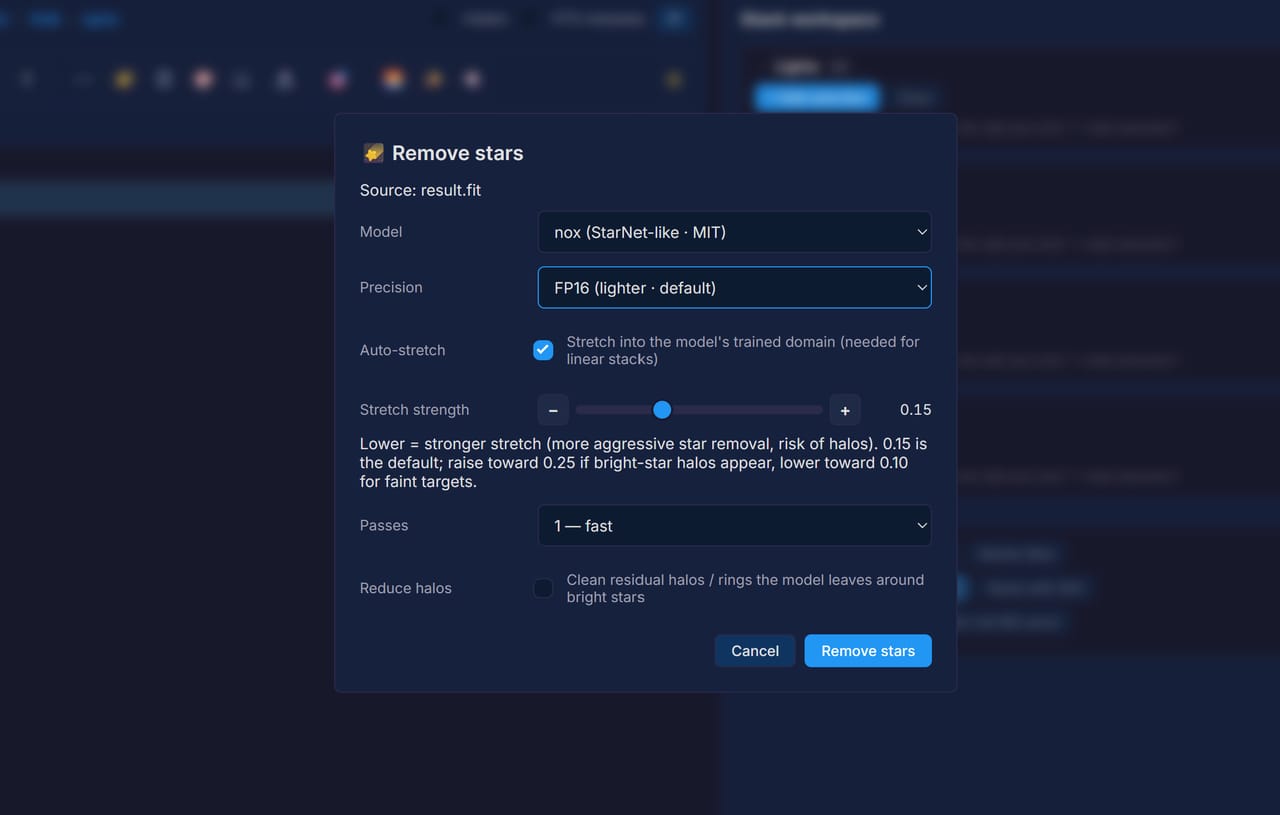
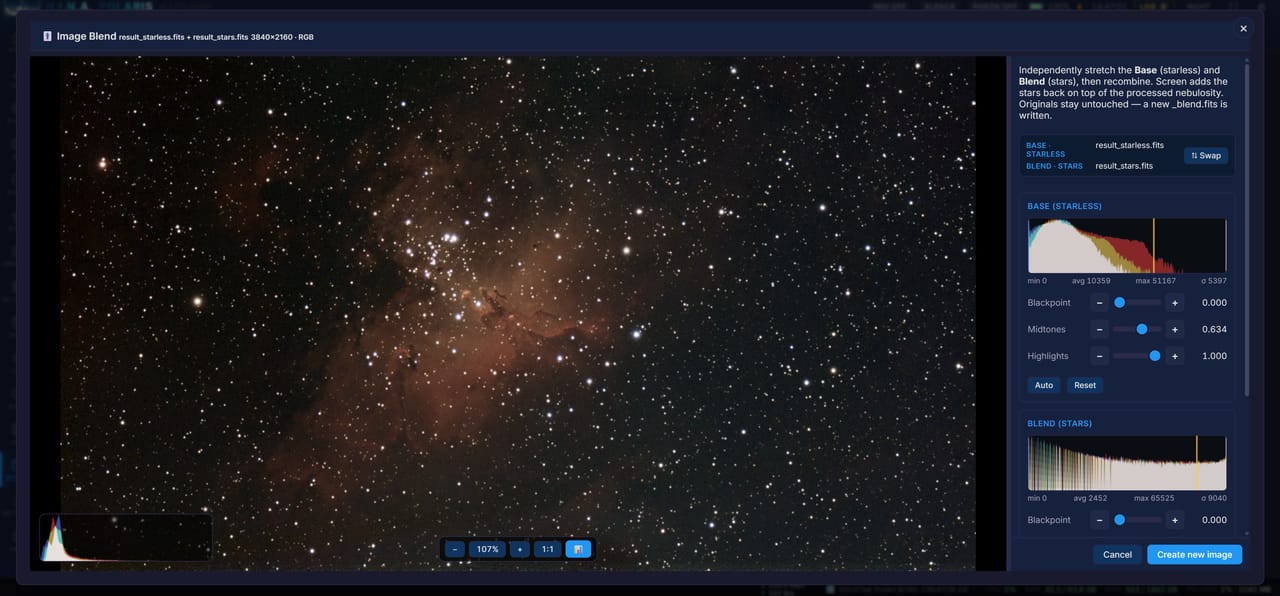
A complete STUDIO for stacking and full post-processing, including AI background extraction, denoise, and deconvolution via GraXpert, accelerated on the client GPU through the browser or on the SBC's NPU.

GPU acceleration via OpenCL

OpenCL-backed GPU acceleration for the heavy image-processing paths like debayer, stretch, and stacking, with a transparent CPU fallback when no GPU is present.

Benchmarked on real hardware

The built-in benchmark reports a single Polaris score so you can pick a board. Higher is better. Figures below are Release builds.

Device Cores Polaris score Stacking Capture Memory BW
Raspberry Pi 4 Model B 4 cores 110 22.2 Mpx/s 11.5 Mpx/s 4.7 GB/s
Raspberry Pi 5 Model B 4 cores 211 39.9 Mpx/s 27.3 Mpx/s 7.7 GB/s
Orange Pi 5 Pro (RK3588S) best value 8 cores 242 46.2 Mpx/s 30.9 Mpx/s 23.1 GB/s
Core i9-13900KF + RTX 5070 32 threads 936 99.4 Mpx/s 89 Mpx/s 41 GB/s

Polaris score is the headline figure; Mpx/s columns are live-stack and capture throughput. The Orange Pi 5 Pro is shown with the OpenCL GPU backend on (242; 227 CPU only) and the Pi 5 at its best, actively cooled run. Full per-device tables and methodology in the benchmark docs.

Free, open-source, and ready to image.

MIT-style license inherited from upstream N.I.N.A. Bring your own scope.

Free & open-source · MIT-style license inherited from upstream N.I.N.A.